No products added!


Price range: $550.99 through $950.99
Note: African Ringneck Parakeets are illegal in the states of New Jersey and Colorado. Always check your local laws before purchasing or keeping one.
Caution: African Ringneck Parakeets require experienced bird handling. They can also be difficult to tame. New owners may need to spend extra time building trust and training their bird after arrival. These birds are not hand-fed or fully tame.
Note: African Ringneck Parakeets are illegal in the states of New Jersey and Colorado. Always check your local laws before purchasing or keeping one.
Caution: African Ringneck Parakeets require experienced bird handling. They can also be difficult to tame. New owners may need to spend extra time building trust and training their bird after arrival. These birds are not hand-fed or fully tame.
African Ringneck Parakeets are excellent talkers. With patience and regular training, they can learn to mimic words and sounds.
The rose-ringed parakeet (Psittacula krameri) is a medium-sized parrot in the Psittacula genus. The African Ringneck is also known as the African ring-necked parakeet.
African Ringnecks (Psittacula krameri krameri) look very similar to Indian Ringnecks. However, there are several differences between the two.
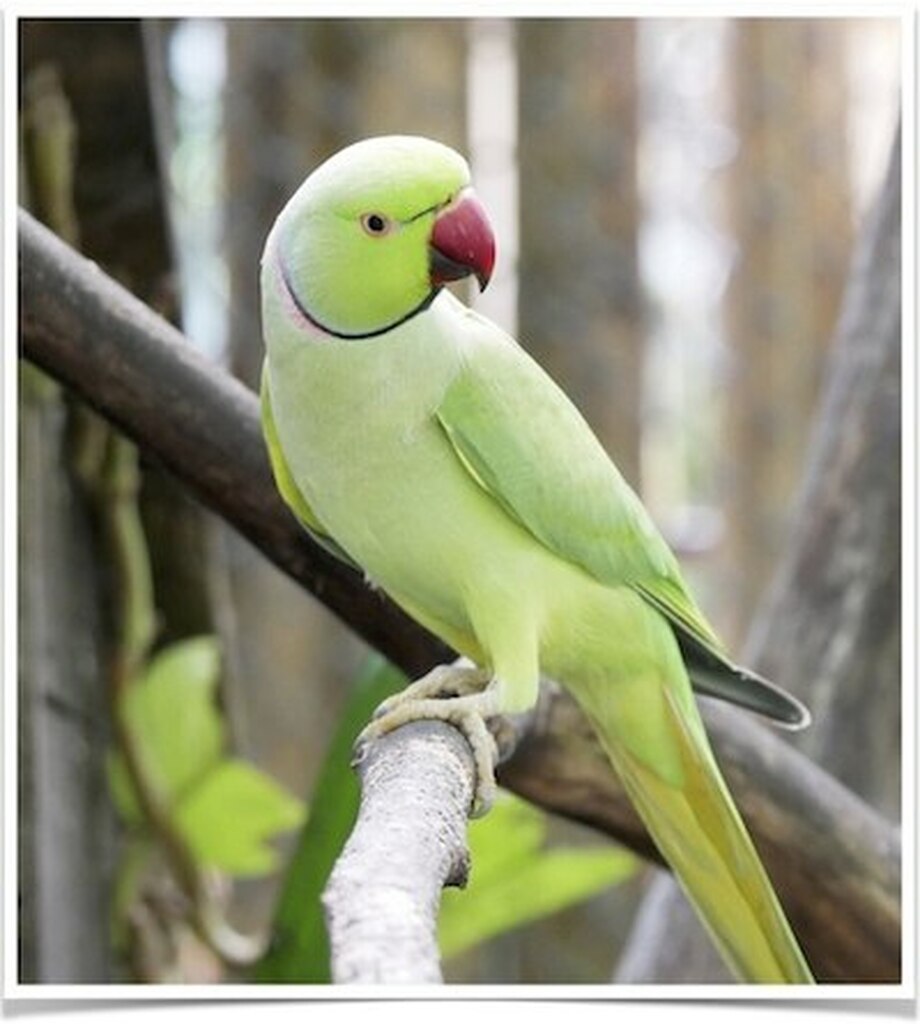
African Ringnecks usually have lime-green feathers. Indian Ringnecks are often a brighter green. The African Ringneck also has a more noticeable black ring around its neck.
The black ring is thicker near the base of the beak. It can also cover more of the rose-colored neck ring that is common in adult males.
African Ringnecks have a smaller, plum-colored beak. Indian Ringnecks usually have a larger red beak.
Size is another noticeable difference. African Ringnecks are about the size of a cockatiel. Their tails are also longer in proportion to their bodies. Both types can have yellow feathers under the wings and tail.
Geography: West Africa, Senegal, Mauritania, Uganda, and southern Sudan
Size: About 9 inches
Life span: 20 to 28 years
Song and Call: African Ringnecks are known for their clear calls and ability to mimic sounds.
Male and female African Ringnecks have similar coloring when they are young. This can make it difficult to determine their sex at an early age.
Adult males are mainly light green. They may have a greenish-yellow color on the underparts. Males develop a black neck stripe that connects to a rose-pink collar. The collar can also have a light blue color.
Males may also have a thin black line that extends from the beak toward the eyes.
Females do not develop the same rose-pink collar. They also lack the blue coloring around the neck and the prominent black neck ring found in adult males.
Instead, females usually have a light green collar. They may also have only a small amount of black coloring near the eyes.
Some young or monomorphic bird species cannot be sexed reliably by appearance alone. If there is no gender option listed for a bird on our website, DNA testing may be required to determine its sex.
DNA testing costs an additional $149 per bird. Testing may add 3 to 6 weeks or more to the estimated delivery time. This allows time for the sample to be processed and the results to be received.
African Ringneck Parakeets are intelligent and affectionate birds. They need regular attention and interaction to stay mentally stimulated.
They can also enjoy independent playtime on a safe play gym. With patience and consistent training, they can learn tricks and become affectionate companions.
African Ringnecks have a big personality for their size. Their intelligence and playful nature can make them rewarding pets.
However, individual birds have different personalities. Some may need more time and patience before they become comfortable with handling.
Breeding African Ringneck Parakeets can be challenging. Some pairs can be particular about their nesting location and may become nervous when the nest is inspected.
A quiet and secure environment can help reduce stress during breeding. The nesting box should be placed high enough to give the pair a sense of security.
The breeder should still be able to access the nesting box safely. It can also help to make a soft sound, such as a whistle, before entering the aviary. This lets the birds know that someone is approaching.
A balanced diet is important for your bird’s health. Suitable foods can include:
Fresh foods should be clean and suitable for parrots. Always provide fresh drinking water as well.
| Sex | Male, Female, Pair |
|---|
Reviews
There are no reviews yet.