No products added!


Price range: $355.99 through $555.99
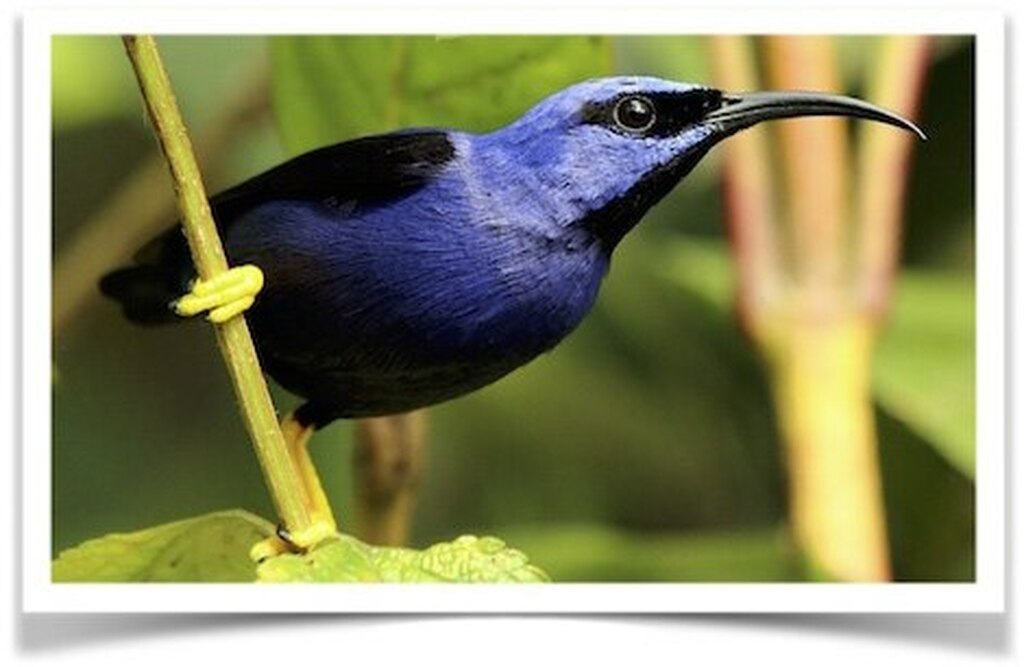
The Purple Honeycreeper (Cyanerpes caeruleus) is a small bird in the tanager family. It is found in the tropical New World from Colombia and Venezuela south to Brazil, and on Trinidad. The male is purple with black wings, tail and belly, and bright yellow legs. Females and immatures have green upper parts, and green-streaked yellowish-buff under parts. The throat is cinnamon, and there is a blue moustachial stripe. Habitats include canopies of tall humid terra firme and várzea forest, wooded borders, second growth, open woodland and tree-scattered clearings, river edges, plantations and gardens. Buy Purple Honeycreeper Online
The Purple Honeycreeper (Cyanerpes caeruleus) is a small, colorful bird belonging to the tanager family. Native to the tropical regions of the New World, this striking species is known for the vivid purple plumage of the male and its bright yellow legs.
At Aviora Haven, we provide useful information about the Purple Honeycreeper, including its appearance, habitat, temperament, breeding behavior, size, and general characteristics.
The adult male Purple Honeycreeper has beautiful purple plumage, contrasting black wings, a black tail, and a black belly. Its bright yellow legs make this small bird especially distinctive.
Females and immature birds look quite different from adult males. They generally have green upperparts and green-streaked, yellowish-buff underparts. The throat is cinnamon-colored, with a noticeable blue moustachial stripe.
This difference between males and females makes the Purple Honeycreeper relatively easy to sex visually.
The Purple Honeycreeper is found across tropical regions of South America. Its range extends from Colombia and Venezuela south through Brazil, and the species also occurs on Trinidad.
Its natural habitats include:
Purple Honeycreepers are often active in trees and can be found foraging in areas with flowering plants and fruit.
The Purple Honeycreeper is a small bird measuring approximately 4 inches in length.
Weight: Approximately 8–14 grams
Lifespan: Up to approximately 17 years
Despite their small size, these active birds have an energetic and inquisitive nature.
The Purple Honeycreeper produces high-pitched vocalizations. Its calls have been described as thin, high notes such as “zree” and short “psit” notes.
These calls may be repeated frequently, especially when the birds are active or interacting with other members of their group.
Purple Honeycreepers are often seen in small groups. They are bold, active, and inquisitive birds that readily investigate their surroundings.
Interestingly, they may respond to the calls of the Ferruginous Pygmy Owl (Glaucidium brasilianum), a potential predator. Instead of simply hiding, the honeycreepers may emerge from cover and investigate or mob the perceived threat.
This behavior highlights their alert and confident nature.
The female Purple Honeycreeper builds a small cup-shaped nest, usually placed in a tree.
She lays a clutch of approximately two white eggs marked with brown blotches and incubates them.
After the eggs hatch, both adult birds participate in feeding the nestlings.
Purple Honeycreepers are easily sexed visually because adult males and females have distinctly different plumage.
Adult males are primarily purple with black wings, tail, and belly, while females and immature birds are predominantly green and yellowish-buff.
At Aviora Haven, we aim to provide bird enthusiasts with helpful information about unique and colorful species such as the Purple Honeycreeper.
With its striking male plumage, active personality, distinctive vocalizations, and interesting social behavior, the Purple Honeycreeper is a fascinating species for experienced bird enthusiasts to learn about and appreciate.
| Sex | Male, Female, Pair |
|---|
Reviews
There are no reviews yet.