No products added!


Price range: $335.99 through $555.99
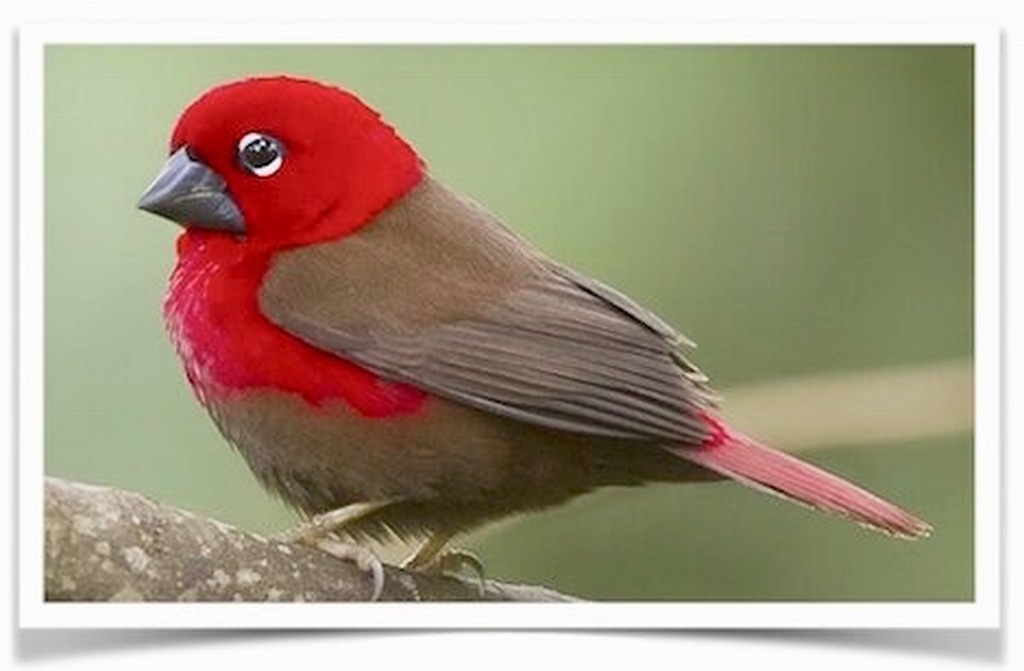
Beautiful red head and chest on male Crimson Seedcracker birds for sale (Pyrenestes sanguineus), make this common species of estlildid finch found in Western Africa, a stunning addition to your aviary. Natural habitat includes freshwater swamp-forest, tidal creeks, brushy growth along streams, low dense vegetation, scrub near rice fields, ponds in logged forest, and wet sedge (Cyperaceae) in open forest. Male has crimson-red on head and neck down onto breast and flanks. Red uppertail-coverts, central rectrices and outer edges of lateral rectrices. The rest of it’s plumage is brown. It has a thick black bill and brown legs. Females have red on most of their head and throat, and from rump to tail, with variable red flecking on the sides of their neck and breast. The rest of her plumage are more tawny-brown with blackish brown on wings and tawny edges of coverts. Buy Crimson Seedcracker Online
The Crimson Seedcracker (Pyrenestes sanguineus) is a striking African finch known for the male’s beautiful crimson-red head and chest. This common estrildid finch is native to Western Africa and can make a distinctive addition to a well-planned aviary. At Aviora Haven, we provide information for bird enthusiasts interested in learning more about this fascinating species.
Crimson Seedcrackers naturally inhabit freshwater swamp forests, tidal creeks, brushy areas along streams, low vegetation near rice fields, ponds in logged forests, and wet sedge habitats in open forests.
The male has a vivid crimson-red head and neck that extends onto the breast and flanks. He also has red upper-tail coverts, central tail feathers, and red edges on the outer tail feathers. The remainder of his plumage is primarily brown. His bill is thick and black, while his legs are brown.
Females also show red coloring, particularly on the head, throat, rump, and tail. However, they generally have more tawny-brown plumage overall, with blackish-brown wings and tawny edges on the wing coverts.
The Crimson Seedcracker is found in parts of Western Africa, including The Gambia, southern Senegal, Guinea-Bissau, Guinea, southwestern Mali, Sierra Leone, Liberia, and Côte d’Ivoire.
The Crimson Seedcracker’s call is a sharp “zeet.” Its song is described as a pleasant, melodious warble that may sometimes be heard during flight.
Crimson Seedcrackers can live approximately 5 to 8 years with appropriate care and suitable living conditions.
Crimson Seedcrackers can be distinguished by their coloration. Males generally have more prominent crimson-red coloring, particularly across the head and chest, while females tend to have more subdued tawny-brown plumage.
Crimson Seedcrackers are generally shy and secretive birds. They are often found in pairs or small groups and may quickly retreat into dense vegetation when disturbed.
They tend to remain close to the ground and spend considerable time in or around low bushes. Although they are usually solitary while feeding, they may occasionally gather with other birds while searching for food.
Because of their quiet and cautious nature, providing plenty of cover and suitable vegetation can help them feel secure in an aviary.
During courtship, the male may display while perched, holding a long stem in his bill as he hops up and down. He may also perform a similar display on the ground while carrying grass.
During sexual flight displays, the female may fly in irregular, undulating circles while the male follows and sings.
Crimson Seedcrackers build ball-shaped nests with a side entrance. Nests may be constructed from dry fern fronds, dead leaves, and reeds and are lined with soft grass heads. They are typically positioned approximately 1–3 meters above the ground or water, beneath dense vegetation.
A clutch generally contains 3–4 eggs, and both parents participate in incubation. The incubation period is approximately 16 days.
In the wild, Crimson Seedcrackers primarily feed on seeds from grasses and other plants, including sedges, reeds, papyrus, and Carex. They may also consume paddy rice and fruit.
During the breeding season, insects can be an important dietary supplement. Because these birds commonly feed on or near the ground, food should be offered in a way that allows them to forage naturally and safely.
A varied diet may include appropriate finch seed, suitable grains, fresh foods, and additional protein sources during breeding, together with access to clean drinking water and appropriate mineral supplementation.
If a gender option is not listed for a bird, the species may be difficult to sex visually. Aviora Haven offers DNA testing for an additional $149 per bird to help determine the preferred gender.
DNA testing may add approximately 3–6 or more weeks to the estimated delivery time because additional time may be required to obtain the gender results. Please refer to the Aviora Haven FAQs for additional information.
Buy Crimson Seedcracker Online from Aviora Haven and learn more about this remarkable African finch before adding one to your aviary.
| Sex | Male, Female, Pair |
|---|
Reviews
There are no reviews yet.