No products added!


Price range: $145.99 through $255.99
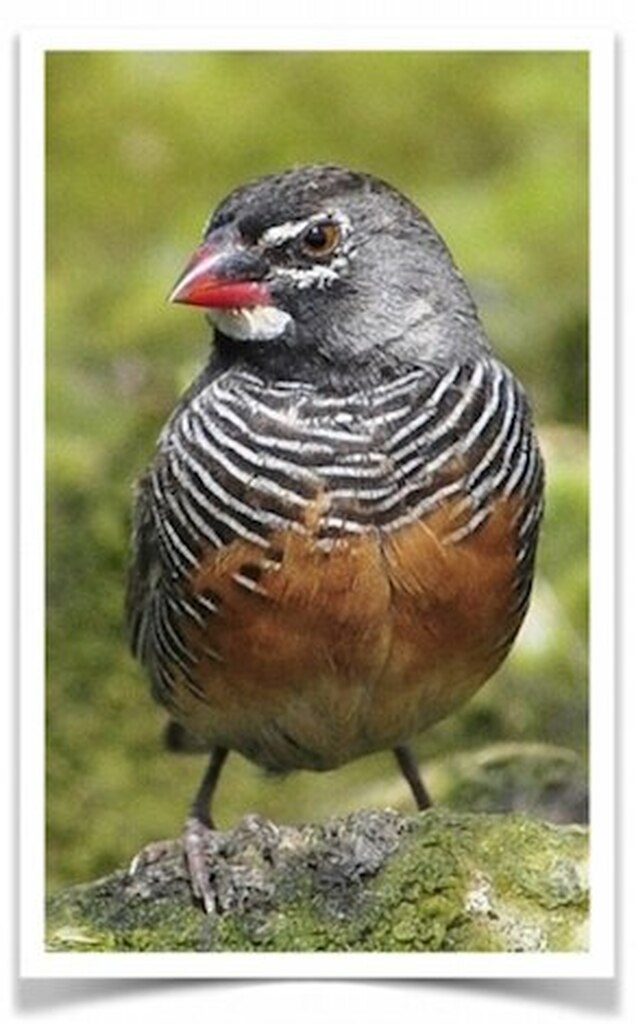
The African Quailfinch (Ortygospiza atricollis) is part of the Estrildidae (Waxbills) family. They are also known as Common Quailfinch, Black-chinned Quailfinch, Ground Finch, Partridge Finch or simply Quail Finch. In France, they are called “Astrild-caille à lunettes.” In the German language this finch is referred to as “Wachtelastrild”. In Spain, this finch is named “Astrilda Aperdizada”. African Quailfinches are usually seen in pairs or small flocks; and they frequent open areas with patchy grass growth – often close to water – including sandy grassland, marshes, farms and croplands, as well as recently mowed areas.
The African Quailfinch (Ortygospiza atricollis) belongs to the Estrildidae family of waxbills. It is also known as the Common Quailfinch, Black-Chinned Quailfinch, Ground Finch, Partridge Finch, or simply Quail Finch.
In France, it is called the “Astrild-caille à lunettes.” In German, it is known as the “Wachtelastrild.” In Spain, it is called the “Astrilda Aperdizada.”
At Aviora Haven, the African Quailfinch is a unique choice for bird enthusiasts who appreciate active ground-feeding finches with interesting natural behaviors.
African Quailfinches are usually seen in pairs or small flocks. They prefer open areas with patchy grass, often near water. Their natural habitats include sandy grasslands, marshes, farms, croplands, and recently mowed areas.
These birds spend much of their time on the ground searching for food. They may also perch on stones, branches, and dead wood.
African Quailfinches are naturally shy and cautious. When approached, they may crouch down and remain completely still. When startled, they can fly straight upward before quickly dropping back to the ground.
Unlike many other finches, Quailfinches usually walk rather than hop. This distinctive behavior makes them especially interesting to observe.
Africa
Click to hear the African Quailfinch.
Approximately 3.7 inches.
Approximately 3–7 years.
Male and female African Quailfinches have slightly different plumage. However, young birds can be difficult to sex visually.
If there is no gender option listed for a bird on our website, the species may be difficult to sex visually. DNA testing is available when gender confirmation is required.
DNA testing costs an additional $149 per bird. Testing may add 3–6 or more weeks to the estimated delivery time because the gender results must be received before shipping.
African Quailfinches have a naturally shy and flighty temperament. They can be easily startled, so they benefit from a calm environment with plenty of space and suitable cover.
Because they spend much of their time on the ground, provide a safe area where they can forage and move naturally.
African Quailfinches are generally monogamous. If a mate dies, the surviving bird may form a new pair bond.
They build dome-shaped nests from grass stems and blades. The nest is usually placed on the ground.
A typical clutch contains 3–6 white eggs. Both parents participate in incubation, although the female does most of the incubating. The incubation period is approximately 14 days.
During breeding, provide appropriate nesting material and access to additional protein-rich foods.
African Quailfinches are primarily ground feeders. Their natural diet consists mainly of small grass seeds.
A suitable captive diet can include:
Fresh food and clean drinking water should always be available.
African Quailfinches are best suited to bird keepers who can provide a peaceful environment with enough space for natural ground-foraging behavior.
With proper housing, nutrition, and care, these unusual finches can be an interesting addition to a well-planned aviary.
Aviora Haven provides African Quailfinches for bird enthusiasts looking to add this distinctive species to their collection.
| Sex | Male, Female, Pair |
|---|
Reviews
There are no reviews yet.